
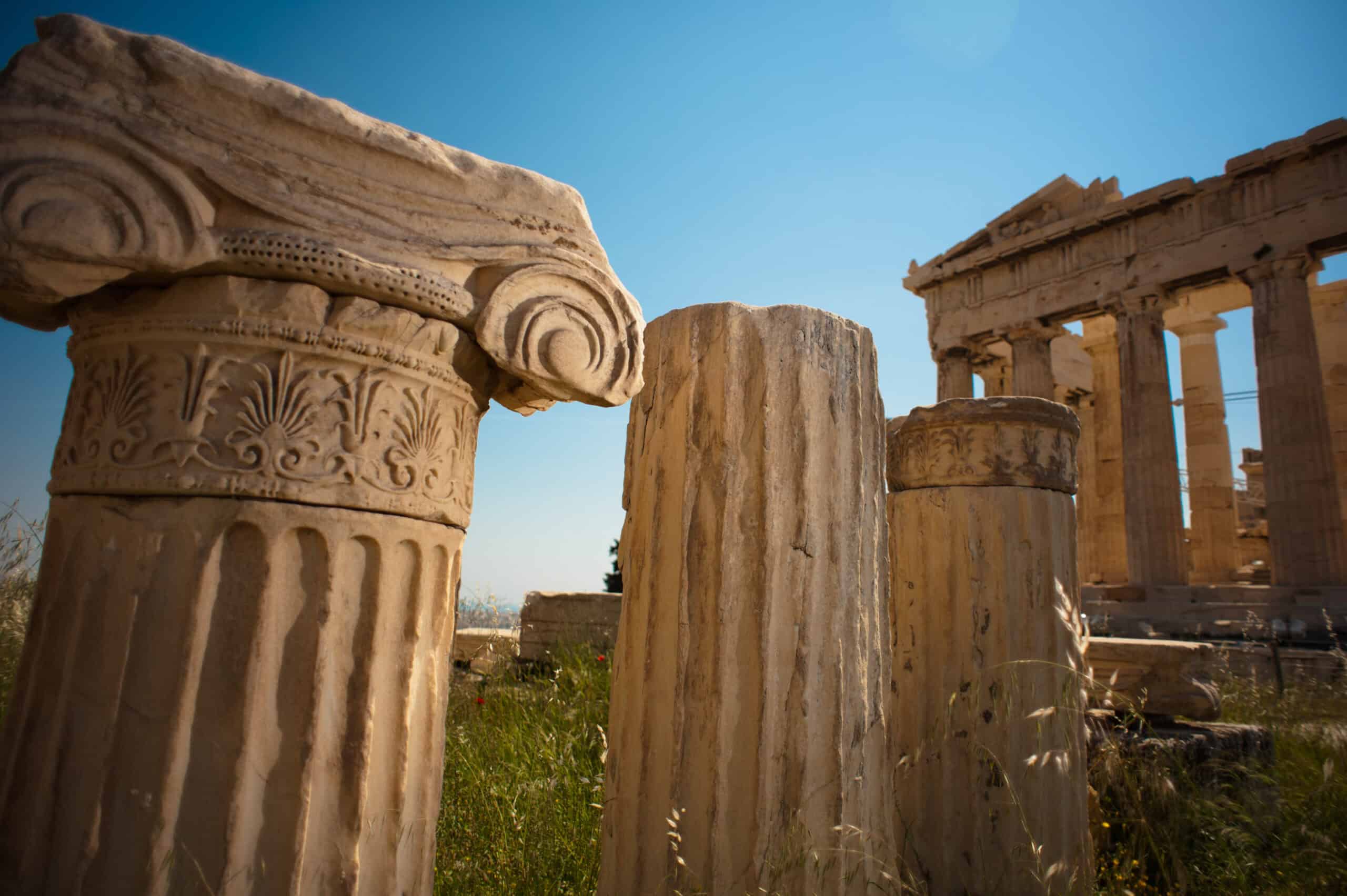
With the highest ratio of museums to people anywhere in the world, Greece is a veritable culture spa. You will leave the country refreshingly up to date on your history. Plus a few pounds heavier, but that’s a different story altogether (damn you tasty loukoumades!). Athens is a living museum and it’s not hyperbole. Seeing as numerous layers of history are buried under thick sediment in various states, Athens is continuously yielding artefacts like a mine produces minerals.
The Athens metro itself is nothing short of a miracle. Not because it was hard to build, but because the sheer amount of antiquities unearthed during the process was mind numbingly staggering. The process was laborious for both workers and the several archaeologists dispatched to each site. The Athens metro system is in fact a museum, with everything found displayed in situ in each station.
So, naturally, with so much antiquity to show it’s only normal that there should be an abundance of museums. And galleries. Because we Greeks love our art!
Athens Archaeological Museum
The Athens Archaeological Museum houses the biggest collection of ancient Greek artefacts outside of the British Museum. It is housed in an impressive Theophile Hansen neo classical. Inside, visitors can explore a wide range of exhibits covering prehistoric times through to late antiquity, including sculptures, pottery, jewellery and everyday objects that offer insight into ancient Greek life. Highlights include the Mask of Agamemnon, the Antikythera mechanism and an extensive collection of Cycladic and Mycenaean artefacts. Just right from the corner is the Epigraphical Museum, a quieter but equally interesting space dedicated to ancient inscriptions.
Acropolis Museum
For those wanting to view the Acropolis and everything about it, head to the Acropolis Museum, right across the Acropolis. Designed to showcase the findings of the site in a clear and modern setting, the museum offers a deeper understanding of the monuments and their history. As you move through the galleries, you’ll see sculptures, artefacts and architectural elements that once formed part of the Acropolis itself, all displayed in a way that mirrors their original placement. The top floor, aligned directly with the Parthenon, is particularly striking, allowing visitors to connect what they see inside with the monument above. Large glass panels also provide constant views of the Acropolis, creating a seamless link between the museum and the archaeological site. It’s an essential stop for anyone looking to go beyond the surface and understand the cultural significance of one of Athens’ most important landmarks.
Benaki Museum
The Benaki Museum is world class and features a rich collection from periods following the Greek Golden Age, offering insight into the country’s evolving culture and history. Similarly, the Museum of Cycladic Art highlights early Bronze Age settlements, showcasing how some of the earliest communities in Greece were structured.
Musem of Modern Art
The Museum of Modern Art, located on Syggrou Avenue near the Onassis and Niarchos cultural centres, is Athens’s answer to MoMA. Although still relatively new, it has already gained recognition through collaborations such as the Documenta exhibition, bringing contemporary art into the city’s cultural spotlight.
Why Visit the Museums in Athens?
This is just the tip of the iceberg of the museums in Greece. Literally, you could spend a whole week in Athens and not even see half the stuff on display, leaving you wanting for more. And remember, that’s just the Athens museums. If you decide to take in everything, everywhere, you’d need a permanent resident permit. If you’re interested in having your own museum tours & visits to the Acropolis get in touch with us and we’ll arrange your Greece trip for you!